
 By
By 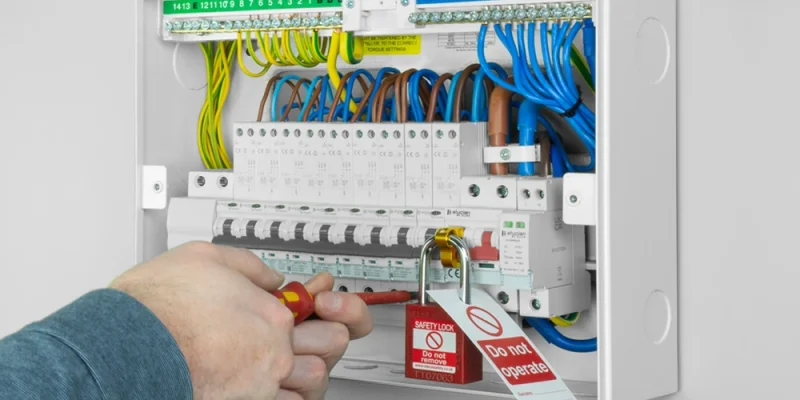
Most people only think about circuit protection once something’s already gone wrong. By then, the device that should’ve been sitting quietly in the board for years has already failed at the one job it had.
An rcbo combines the job of an MCB and an RCD into a single unit. It protects a circuit from overcurrent and earth leakage simultaneously, not sequentially, not as a backup to each other. NAW Controls stocks a range built to Australian standards, covering ratings from 6A right up to 45A across both Eaton and Eureka lines.
Why bother combining two devices into one?
A standard RCD only catches earth leakage. Nothing else. It won’t respond to a short circuit or an overload, which is exactly why older switchboards paired an RCD with a separate breaker just to get anywhere near full coverage.
Folding both functions into a single rcbo means one device does the whole job instead of two doing half each. Less board space. Fewer components an electrician has to wire, test, and eventually service. And fewer connection points that can work loose over the years a board’s expected to run untouched.
The bigger win is protecting one circuit at a time
Here’s the part that actually matters on a real job site, not in theory, but the moment something trips. With a shared RCD sitting across multiple circuits, one earth leakage fault anywhere on those circuits takes the lot down. Every circuit connected to that RCD goes dark, including the ones that had nothing to do with the fault.
An RCBO isolates a single circuit instead. One fault, one circuit down, everything else keeps running exactly as it should. It also cuts fault-finding time dramatically. The electrician already knows which circuit tripped rather than testing through half the board to find the one that actually failed.
Picture a household where the kitchen stays lit while a fault gets sorted on a bathroom circuit. Or a retail fit-out where one till goes dark instead of the whole store losing power mid-trade.
It isn’t optional in most new work
Under Australian electrical safety standards, some form of residual current protection is mandatory on most power and lighting circuits. New installations, major renovations, no real exceptions worth relying on. Using an RCBO is often the cleaner path for contractors chasing AS/NZS 3000 compliance without stacking extra breakers into a board that’s already tight on space.
That compliance requirement doesn’t scale down for smaller jobs, either. A single-circuit domestic rewire carries the same obligation as a full commercial fit-out. Skipping it isn’t a shortcut. It’s a callback waiting to happen, and inspectors check for exactly this.
Match the rating to the actual circuit
The current rating has to match the cable size and the expected load, not whatever unit happens to be closest on the shelf. Most domestic power circuits run a 16A or 20A device at 30mA sensitivity, the standard threshold for personal safety.
Industrial equipment rarely plays by that same script. Higher amp ratings, different trip curves, sometimes both at once, depending on what the connected equipment actually draws under load. NAW Controls carries Eaton and Eureka ranges across a spread wide enough to match the device to the circuit rather than settling for close enough.
Get the rating right before the board’s built, wired, and signed off. A mismatched RCBO tends to announce itself two ways, nuisance tripping that drives everyone mad, or inadequate protection that nobody notices until it matters. Checking the rating against the circuit costs a few minutes at the ordering stage. Fixing it afterward costs considerably more.









Comments